Wednesday, June 12, 2013

illustrated world of virginia frances sterrett

Blondine and the Tortoise

Europa and the Bull

Old French Fairy Tales
Blondine Threw Her Arms Around the Deer

Medea and the Snakes

Proserpina and the Sea Nymphs


Virginia Frances Sterrett
When Sterrett reached 19, two things happened: first, she received 
a commission to illustrate her very first book called Old French 
Fairy Tales by Comtesse de Segur.  Second, she came down with 
tuberculosis which soon began to sap her strength.  The race was on.
For the rest of her short life, Sterrett worked as hard as her failing 
strength would allow, illustrating Tanglewood Tales
the Arabian Nights, and Myths and Legends.

By the time she turned 22, she had to enter a sanatorium where she
could only work for short periods of time before resting.  Yet, Sterrett's
exhaustion does not show up in her pictures.  You do not see her
taking shortcuts or compromising the quality of her work.  She seemed
intent on making her pictures perfect, to isolate them from the 
limitations and frustrations of her life.
Virginia knew the game was fixed against her; she will not have a 
lifetime to improve her skills or compile a major body of work.
The work under those restrictions might have made sense to give
up or resort to drink, but still she persisted.  The time was devoted to
making pictures. She was almost finished with Myths and Legends when she passed 
into the spirit world.

The local newspaper, St. Louis Post-Dispatch, ran an obituary that
remarked upon the disparity between her life and exotic world
she drew:
Virginia's life spent in prosaic places of the West and Middle West,
she made pictures of haunting loveliness, suggesting Oriental lands
she never saw and magical realms no one ever knew except in the 
dreams of childhood....Perhaps it was the hardships of her own life
that gave the young girl's work its fanciful quality.  In the imaginative
scenes she set down on paper, there must have been an escape from
the harsh actualities of existence.

Friday, June 7, 2013

healing fabrics, it's in the threads


Ayurvastra
I recently stumbled upon information pertaining to an ancient 
technique of dyeing textiles using medicinal herbs.  It is called
Ayurvastra.  “Ayur" in Sanskrit means health while vastra 
translates to cloth or clothing.
 

Ayurvastra is based on the principle of touch.  Every contact 
with the cloth helps the body lose toxins and enhance 
the metabolism.  The threads or cloth has been permeated 
with spices, herbs and oils to help cure a wide range of 
ailments and basically following known effectiveness 
of the plants.  The most regenerative time to wear Ayurvastra 
is while sleeping or meditating.

I find this all fascinating, logical, remarkable, yet near 
fundamental.  After researching into the technical process, 
I found the technique a bit off the mark.  Bleach, cow's urine, 
dyeing gum, and thirty days for the process.  I wonder if 
organically produced fibers will help decrease the time 
while increasing the legitimate value.
 

Some of the herbs used in the dye baths include curry leaves,
turmeric, neem and sandalwood.

Monday, June 3, 2013

acrojou, spinning homes, performance


Acrojou Circus Theatre with The Wheel House
A device that defies the laws of gravity and many other conventions. 
The characters, through acrobatics and black humor, do a round trip 
and surreal that leads nowhere, housed within an exquisite structure, 
built by hand. 
Formed in 2006 by Artistic Directors Jeni Barnard and Barney White, 
Acrojou have so far created six original shows, toured work to nine 
countries and performed to nearly 60,000 people.
Some of their offerings include:
installation and experimental performancec
corporate and high-end circus spectacle
street theatre 

small to medium scale touring
interactive characters

Their website is filled to the brim with so much documentation of their
works.

Saturday, June 1, 2013

mary wigman is more than a witch


Lake Maggiore 1913

Lake Maggiore 1913


Traumgestalt 1927


Edmund Kesting 1935


Mary Wigman
Interested in the relationship between human being and 
cosmic forces, she describes her creative experience as the 
transformation into movement of the invisible forces 
that give her life.  The dancer is a medium for her; 
dance functions as a trance, accomplishing its cathartic 
function recognized by archaic societies; dance is first of all 
an expression of ecstasy (or emotional impulses) that creates 
forms of movement as a consequence.

Following these ideas, Mary Wigman gives the first steps 
and opens the doors of a trend that influences many generations 
of choreographic artists in the search for new expressive means. 
Her way of dancing is given the name of Ausdruckstanz 
(dance of expression or expressionist dance), and states that no 
movement is considered as ‘bad’ or ‘ugly’ as far as it is executed 
from a true feeling or is evocative.
In consequence, Wigman aesthetics are made up of very 
different elements compared to ballet.  She dances without music, 
uses non attractive costumes, works over subjects like death, 
desperation, the war or social riots, and experiments with masks, 
among other things.  She also opposes to the notion of 
‘representing’ something while dancing, in a search for a truthful 
experience: dance should not represent; dance should be. 
“We don’t dance histories, we dance feelings”, she says.

A great example of this is a document that consists of more than 
70 pages of labanotation scores of exercises of her method. 
The title of the text is Die Frankfurter Seminarreihe in 
Wigman-Technique mit Prof. Gundel Eplinius (Frankfurt, 1990) 
by notator Anja Hirvikallio.
M. Hirvikallio explains that M. Eplinius divides Wigman’s 
technique in five main groups, like this:
- Striding and sliding
- Springs, vibrations and bouncing
- Momentums and oscillations
- Falling and dropping (floor technique)
- Tensions: relaxed, sustained and motor tensions

 excerpt taken from www.contemporary-dance.org

TanzMarchen 1926


Mary Wigman Troupe

Mary Wigman Troupe

Laban and Mary Wigman

Mary Wigman Troupe

Wednesday, May 22, 2013

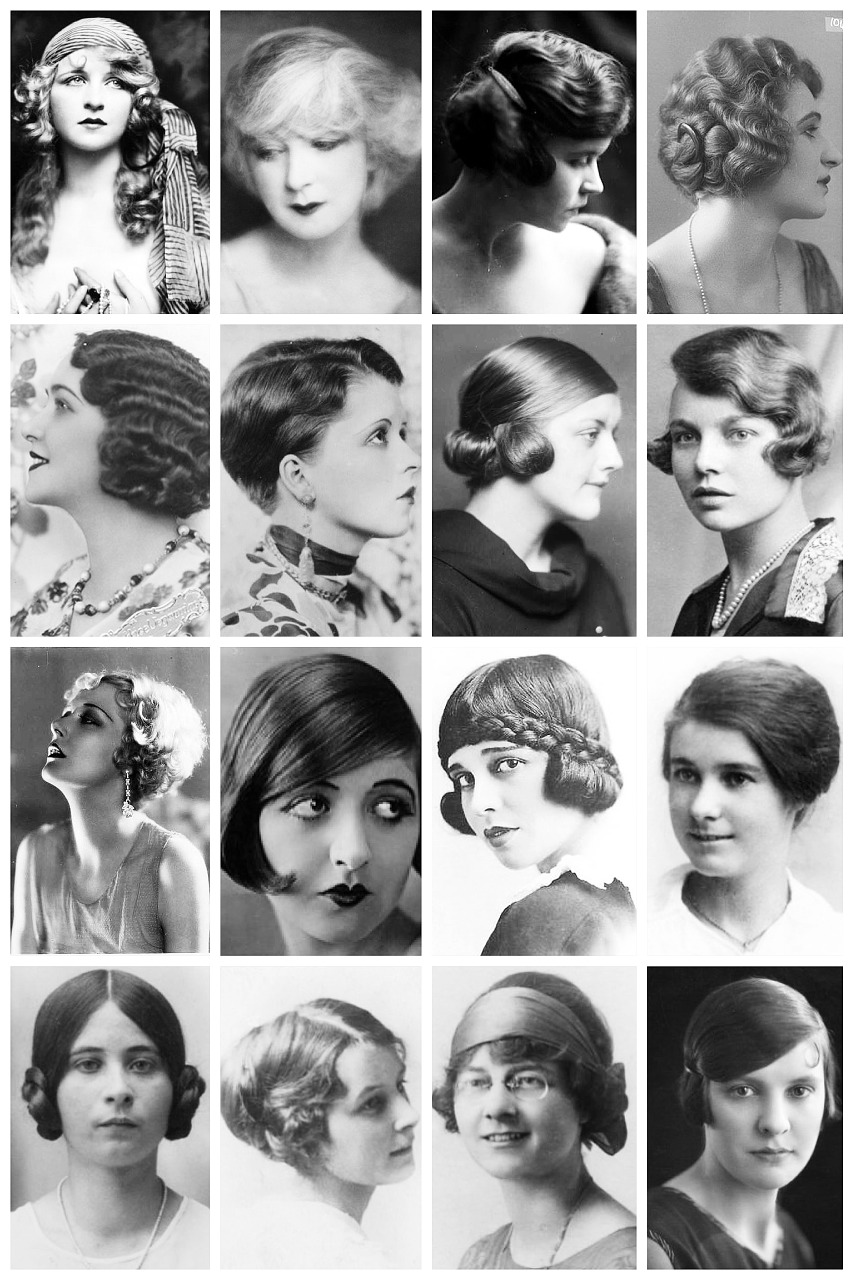
oh my great gatsby, 1920s hairstyles


Some of the hairstyles are pop right out of the time, and 
then many of the styles are still out on the street in the 
newest century.  Hair is part of us, beautiful in every twist
and turn.  
Here's to Vintage Thimble for sharing her collection.

Sunday, May 19, 2013

wild fire loves animals


WILD FIRE Magazine features articles on fair trade, vegan 
lifestyles, fashion and well being.  The ladies behind the 
production are spectacular and extraordinary.  Joanna Kilkelly
and Kohii Love, babes of our future.  We sent down some items
for their Issue 3 and the images above are what they captured
from the lens to the pages of the magazine.

You can connect, download a free issue, and stay with their 
journey.
Facebook
Tumblr
Website

Thank you, Joanna and Kohii, your beauty precedes you.

Saturday, May 18, 2013

asta nielsen, a suffragette lion


Asta Nielsen, a wild and fancy free womyn from the earlier
1900s.  My healthy obsession with silent films has led me towards
this femme.  She is simply striking for her wit, minimalist style,
outrageousness, beauty, and devotion to womyn.
Die Asta was born in 1881, Denmark and lived until she left
this planet 1972, at age 90 in Denmark.  She often portrayed
strong willed, passionate womyn trapped by tragic consequence.
There are over 70 films with Asta, mainly made in Germany.

“Asta Nielsen, she is the most exquisite actress the screen 
has ever seen, her absolutely masterful portrayal and her strong, 
soulful depth produce the greatest artistic pleasure that film 
has to offer. Her artistry shakes me to the core.” 
Mary Wigman


“Asta Nielsen is the only female artist in film who can be 
considered outright as a genius and whose artistic achievements 
have the unforced quality of natural events.  Everyone who 
has ever enjoyed the pleasure of her friendship knows that she, 
like all the other real greats in the world of art, is also 
a significant human being whose exceptional sense of humor 
and deep wisdom about life are without parallel.”
Paul Wegener


"Asta Nielsen" means the power to speak of pathos, to see pain, 
and to find the middle path between Baudelaire's flower of evil 
and the sick rose of which Blake sang."
M. S. Fonseca